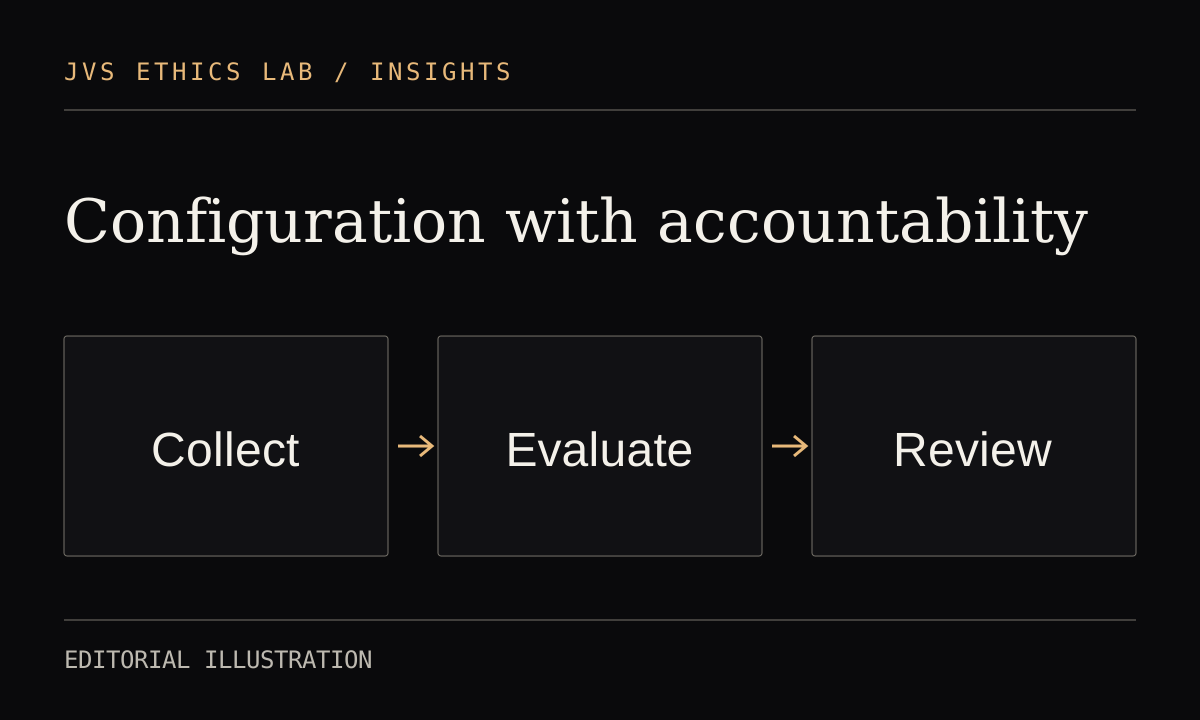
A configurable supplier platform can bring information collection and evaluation into one place. The difficult decisions are not confined to the screen layout: who owns the questions, what a score means and who is accountable when a rule changes?
Separate collection from judgment
In a fictional onboarding process, a questionnaire collects facts and supporting documents. A scoring model interprets some of those facts. An approval is a further business decision. Treating all three as one automatic step makes it harder to explain an outcome or correct a mistake.
Record which answers are evidence, which rules are policy and where an authorised reviewer must decide. A numerical supplier rating should have a documented interpretation; its presence does not establish that the organisation has measured risk accurately.
Give configuration a change process
Consider a hypothetical change to a question or weighting. Does it apply only to new submissions, or should past assessments be reviewed? Which version was used when a supplier was evaluated? Who can authorise the change, and what explanation will users see?
These questions turn “dynamic configuration” into an operating capability. They also help scope the platform. Conditional questions, document requirements and approval routing should be included only when the business has defined those requirements.
Limit access to the actual responsibility
A supplier, an internal assessor and an administrator need different actions and information. OWASP’s Authorization Cheat Sheet recommends denying access by default and validating permissions. Design and test access against the actual resource and action rather than trusting the visibility of a button.
For the fictional workflow, test whether one supplier can see another submission, whether an assessor can alter scoring rules and whether a restricted document can be reached through a direct request. These are proposed acceptance checks, not reported project results.
Keep delivered capability separate from adoption
The founder’s supplier-platform account records dynamic questionnaires, configurable scoring, file uploads and supplier ratings in the technology sector. Production rollout, user adoption and administrative savings are not established. Do not convert a feature list into a measured business outcome.
A Discovery Sprint can define the critical workflow, responsibilities and evidence before development. For released JVS software, the EmailCraft AI example describes a pilot release, while AutoAxxiz is a deployed JVS product whose commercial rollout is paused. These are different evidence categories.